
Three Schooners, One Spirit
By: Rebecca E. Poynton-Murray
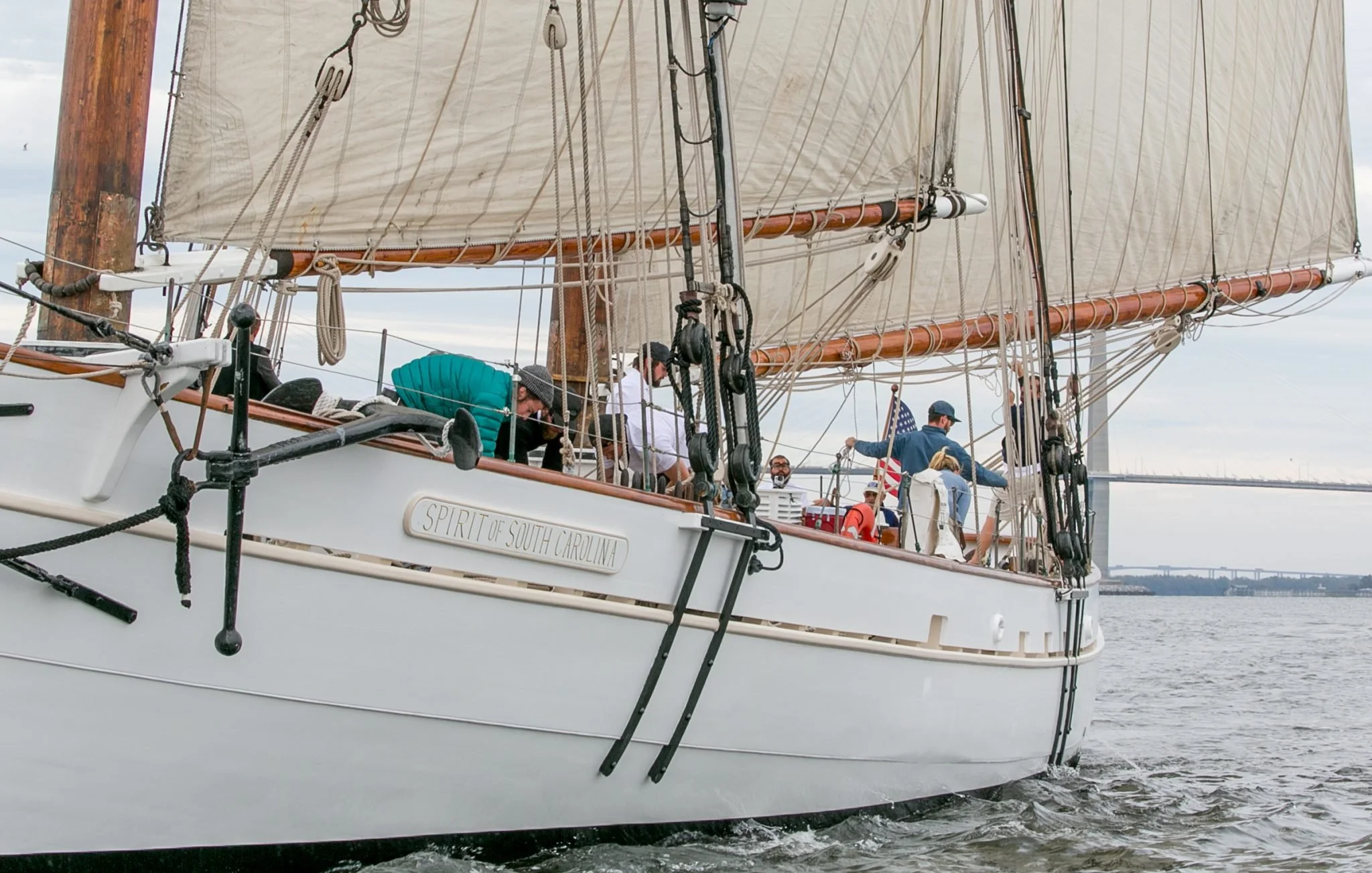
Charleston Harbor is rarely on its best behavior. Wind worries the flags, current shoulders pass the docks, and container ships move through the channel like apartment buildings that have escaped their foundations.
Then the Spirit of South Carolina raises sail.
Canvas climbs oiled masts as lines hauled by coordinated hands are made fast, and the schooner leans into the harbor as if she recognizes its shape. In many ways, she does. This is more than a retrospection about three ships. It is a seafarer's tale about how the character of a waterway shapes the vessels, skills, and communities that grow around it, and how Spirit of South Carolina exists to carry that history forward.
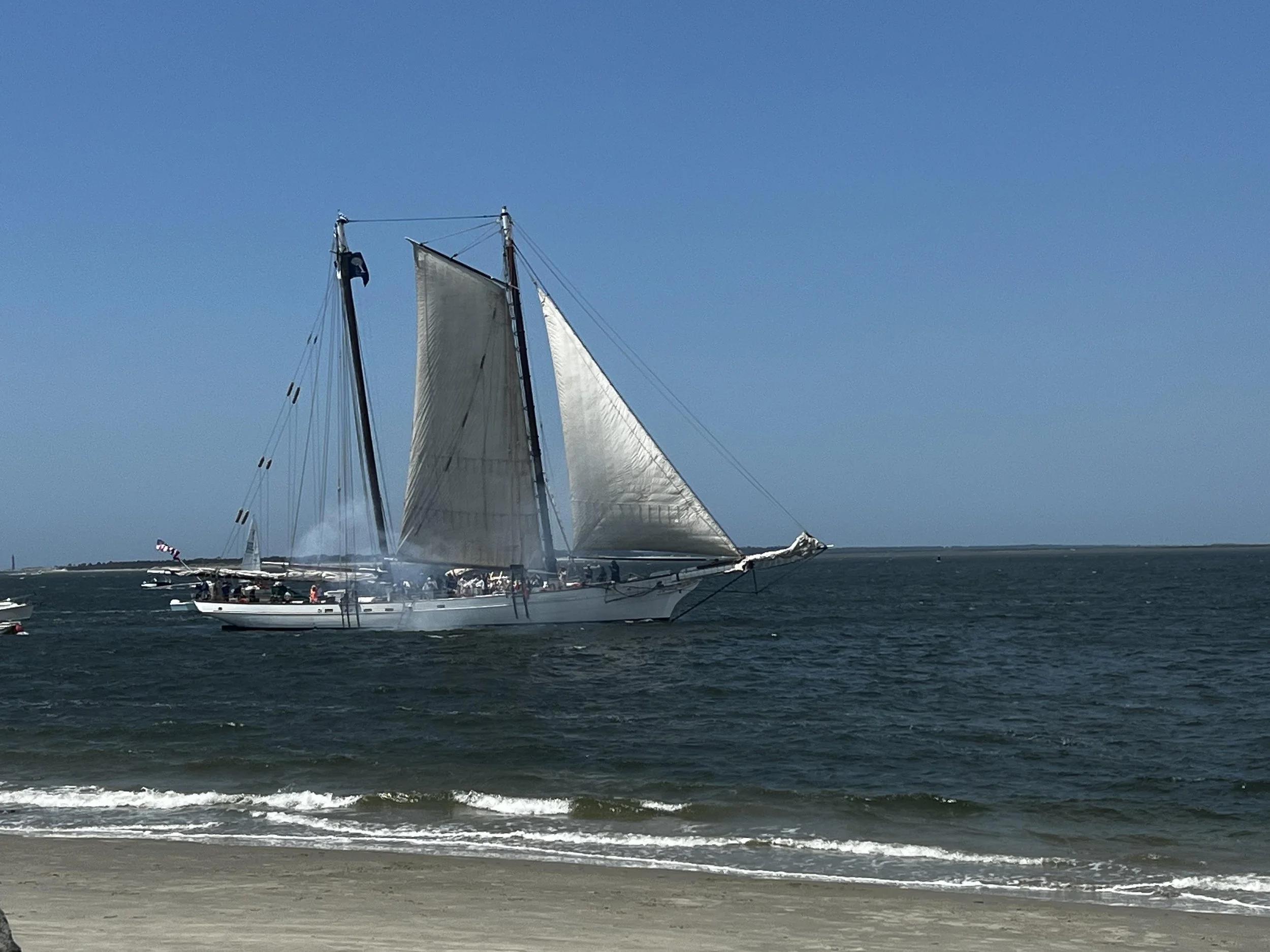
Charleston is not a decorative harbor. It is a restless arrangement of muddy shoals, worrisome tides, bars and shifting channels capable of humiliating anyone who arrives with more confidence than judgment. The old harbor pilots understood this through their very DNA. They needed schooners that could race offshore, survive whatever waited beyond the bar, and put a pilot aboard an incoming ship before a competitor took the job.
Speed was money. Seaworthiness was survival. That combination produced the historic Frances Elizabeth, which was launched in Charleston in 1879 by the Pregnall Shipyard. But her lines carried the influence of another infamous schooner — the yacht America, a black-hulled American provocation that arrived in England in 1851 and caused a first-class disturbance among the sailing establishment.
It was the 22nd of August, 1851 and the small seaport town of Cowes on the Isle of Wight was packed for the Royal Yacht Squadron’s race around the small island nestled into the Southern coastline that defines the raucous English Channel. The beach and esplanade were crowded, the water churned with spectator boats, and 15 yachts gathered for the start. America was last away in an 11-knot southwesterly, then began hunting down the fleet.
This was supposed to be Britain’s water, Britain’s regatta, and Britain’s moment. Instead, the strange American schooner pushed through the pack, lost her jibboom, kept charging, and passed The Needles with her nearest rival miles astern.
Queen Victoria reportedly asked which yacht was second. The famous answer “There is no second” may have improved with the telling, but good sailing has always deserved good theater.
America’s victory did more than produce the trophy that became the America’s Cup. Her long, clean form unsettled previously accepted thinking. Sailors and builders studied her lines because winning has a brutal way of making new ideas look sensible.
In Charleston, Samuel J. Pregnall took the idea and put it to work. Frances Elizabeth was not built to entertain royalty or collect silverware. She was shaped for the harbor, and for the harbor pilots. Offshore weather and a waterway that punished poor decisions defined the need. America supplied the inspiration. Charleston’s Harbor supplied the purpose.
More than a century later, those lines returned in the Spirit of South Carolina.
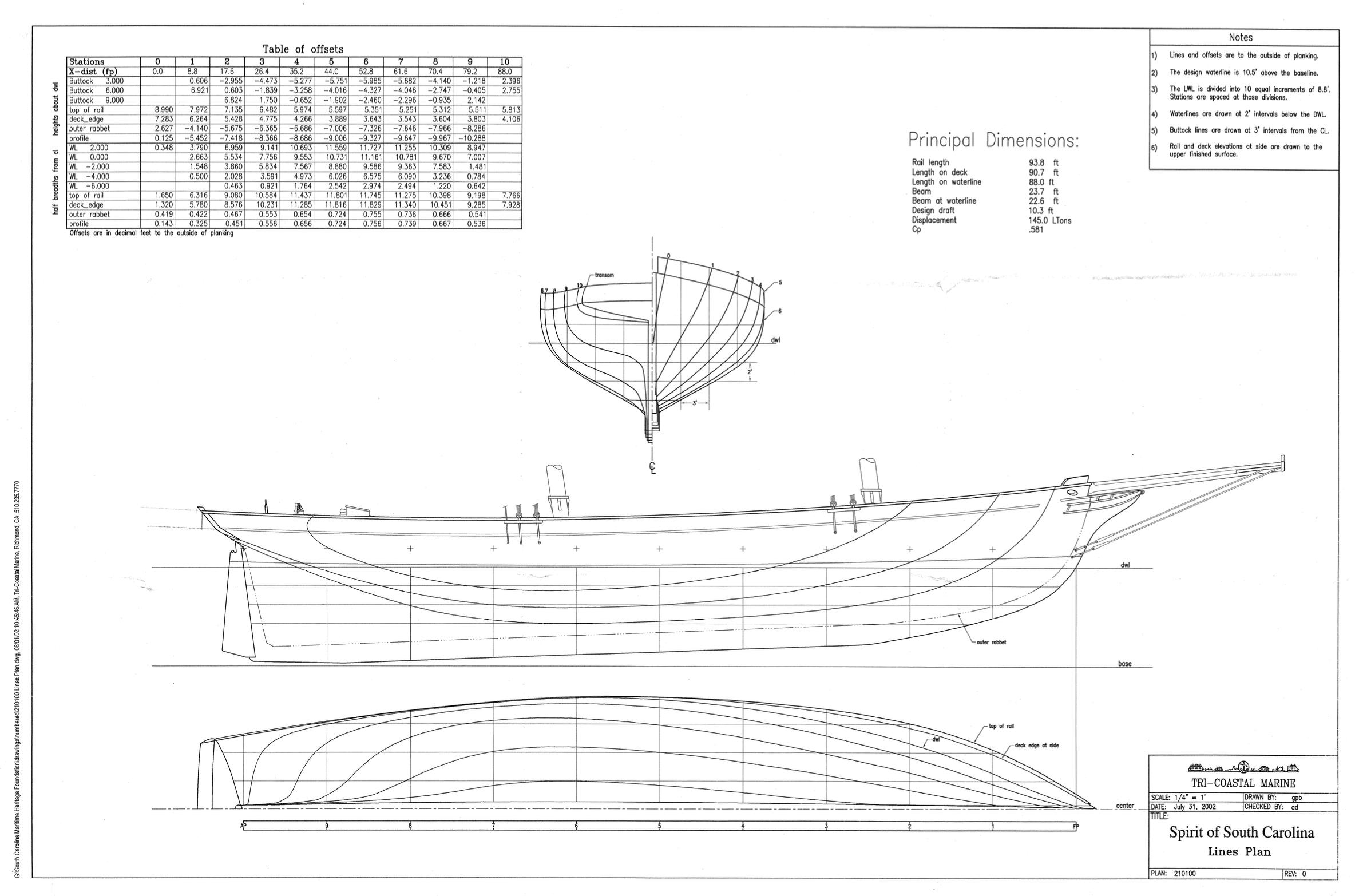
Built in Charleston c.2001, on nearly the same spot of land as Frances Elizabeth, and launched in 2007, Spirit is not a museum piece embalmed in varnish. Her long familiar lines emerged from a pedigree of ceaseless work. She moves. She heels. She demands that people heave together, pay attention, and accept that the wind has no interest in excuses. She is a simple tool built to solve a complex problem. The plans that inspired her were found in the maritime archives of the Smithsonian. The plans that built her now reside in a private collection at the Charleston Library Society, among relics of an era whose presence weighs heavy as ballast stones.
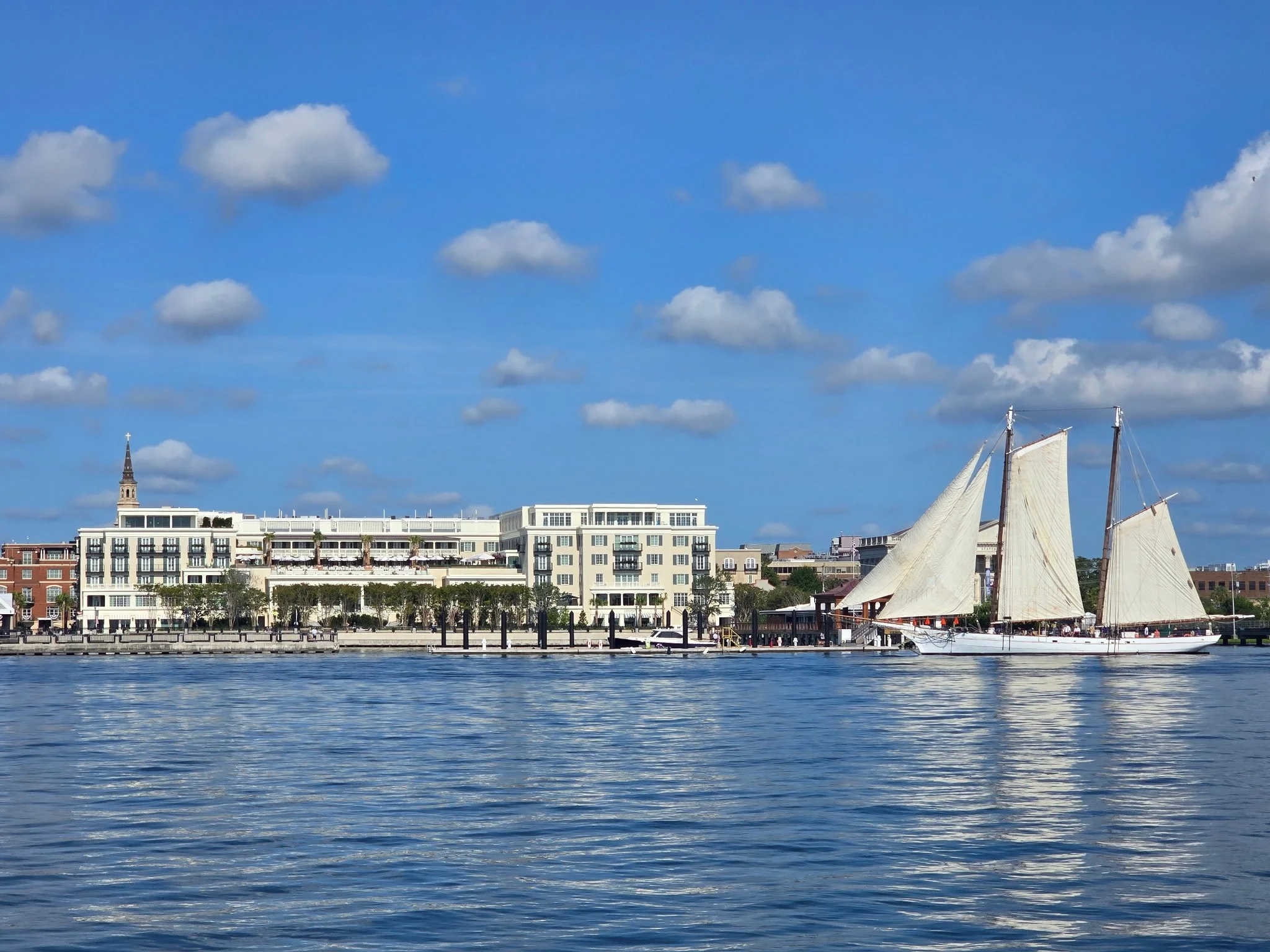
Aboard her, history becomes physical. It is the strain of her rig, the weight of the helm, and the sudden silence when a maneuver requires everyone’s attention. The crew learns what Charleston’s pilots knew: no one outvotes the harbor.
South Carolina reflects on 250 years of history while Spirit has spent 25 years carrying that story through Charleston Harbor along the coasts of North America, where it can be viscerally experienced rather than simply remembered. Through her SC250 programming, each new sailor encounters the past in the called commands of the crew, the filling of a sail, and the shared responsibility of guiding an historically charged vessel through animistic waters. In this way, Spirit does more than preserve Charleston’s maritime heritage–she teaches a new generation how to carry it forward.
That is her provenance; the real lineage connecting these three schooners, and not a tidy procession of dates, but an idea moving through water and time. America proved the shape could win. Frances Elizabeth made it earn a living. Spirit carries it forward, allowing another generation to feel the harbor explain exactly why the vessel beneath them looks the way she does.