How to Be a Boat Dog
By Denise Holmes
A day on the water with your dog can be an incredible experience, but it’s not without risks.
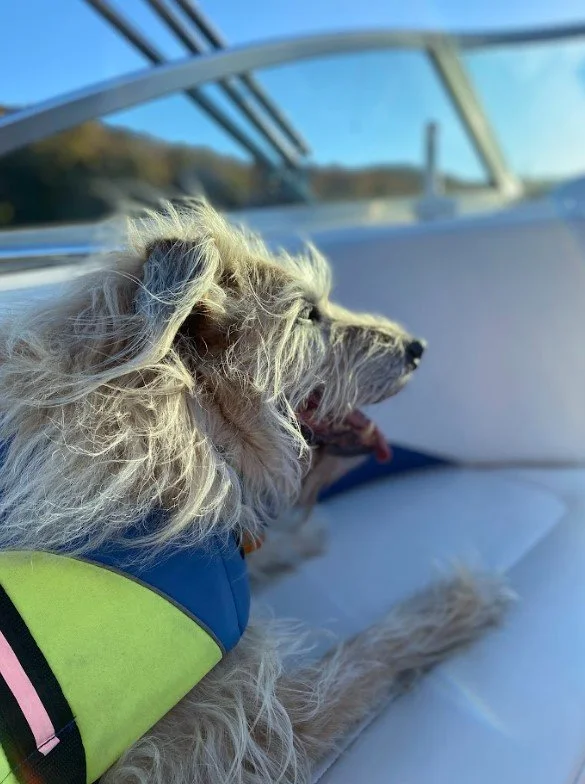
Unsteady surfaces, heat, and overestimating your dog’s swimming ability is dangerous. As a Canine Lifestyle Expert, self-proclaimed water baby, and professional dog trainer with 25 plus years' experience, I know training and preparation are vital.
Whether paddling, sailing, or motor boating, there are simple things you can do to ensure your dog’s safety and comfort. Let’s dive right in with the most important thing first…
Purchase A Canine PFD
Even if your dog swims like Michael Phelps, he needs a PFD. There are many styles; I don’t have a favorite. Just make sure it fits and HAS A HANDLE. You’ll want that handle in case you must fish your dog from the drink or help them in/out of the boat. I have friends with small pooches who use the handle for cooling dips over the side.
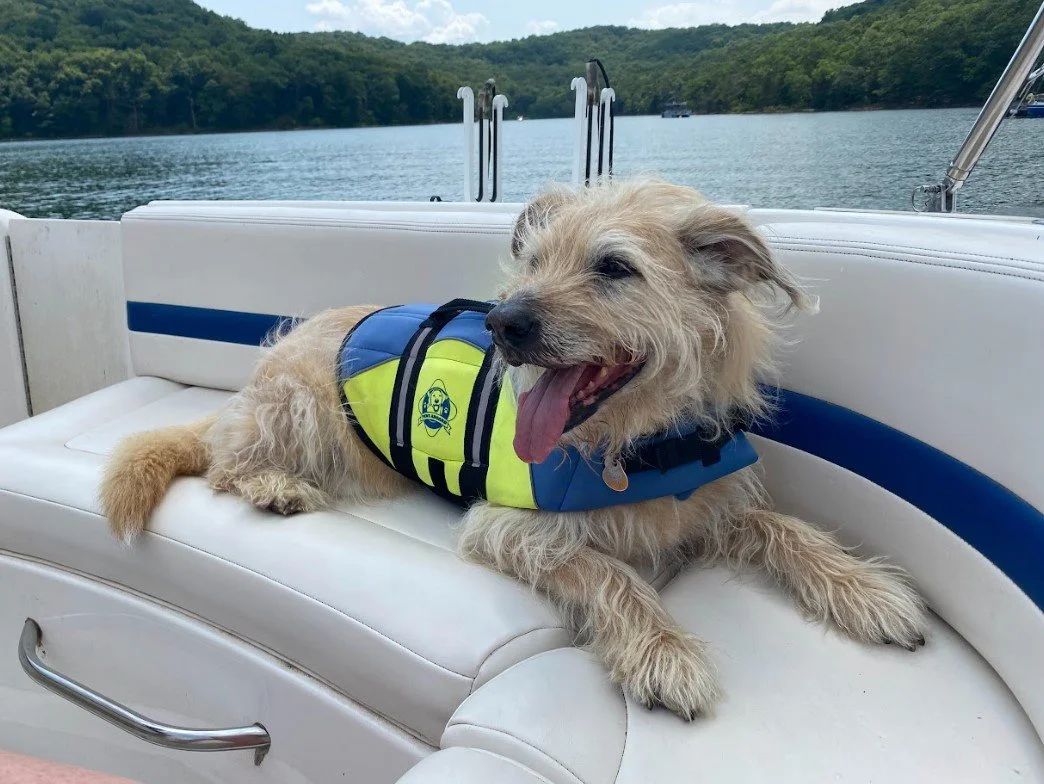
Get your dog comfortable wearing his PFD before you need it.
Most brands have fit charts to help you choose the best size. Outward Hound sent me a case of PFDs to use during my Paddle With Your Dog clinics and they’ve proven durable. Another perennial favorite is the Float Coat from Ruffwear, but please do your own research.
Introduce Your Dog To The Boat
Don’t just jump in and take off; your dog might panic. Orient your pup to the boat while it’s on land or secure at the dock. Run the engine to make sure they’re ok with the noise. If paddling a canoe, kayak, or SUP, show them how to load, where to sit, wave your paddles overhead, rock it a bit- all while on land.
Teach Your Dog Some Basic Commands
‘Wait,’‘load-up,’ and ‘turn around’ (for paddlers) are useful cues. My dog learned, through no specific training, the term ‘Hang on!’ It means square off and steady yourself as best you can.
Take Fresh Water For Your Dog
You don’t drink lake/river/ocean water, and neither should your dog. Ingesting a little bit isn’t likely to make them sick, but pack fresh water and a bowl. Spill proof bowls are excellent boat accessories.
Create A Dog Safety Zone On The Boat
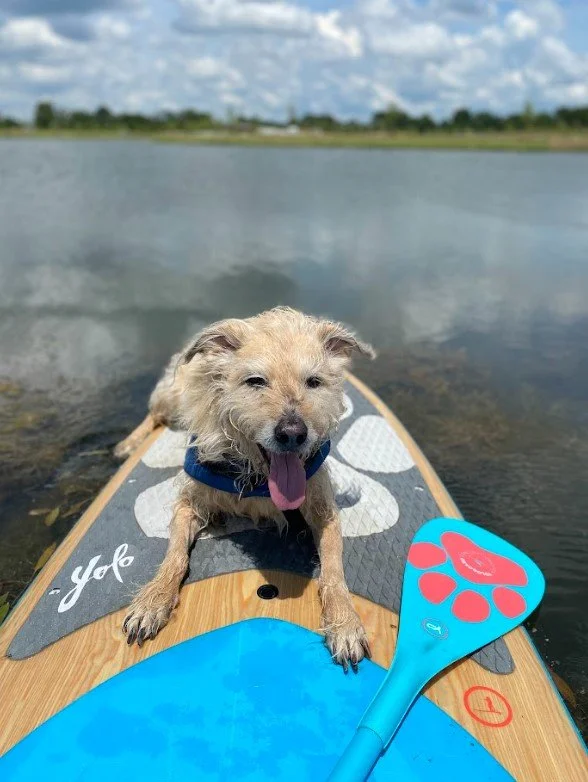
Establish a space where your dog feels comfortable. For sailboats, cuddies, or cabin cruisers, a berth is a good spot. On a ski boat, my dog prefers under the captain’s chair; in a canoe or on a SUP, he rides a little forward or between my feet. Whatever space you choose, make sure the surface is non-slip.
For that, we use what I refer to as our ‘surf mat.’ A surf mat is nothing but a cheap bathmat. It compacts nicely, and on a boat with no carpet, it gives your dog a steady purchase. My dog is familiar enough with the mat that I can throw it on any boat and he knows that’s his spot. A yoga mat, cut to fit, is interchangeable and perfect for kayaking or paddleboarding.
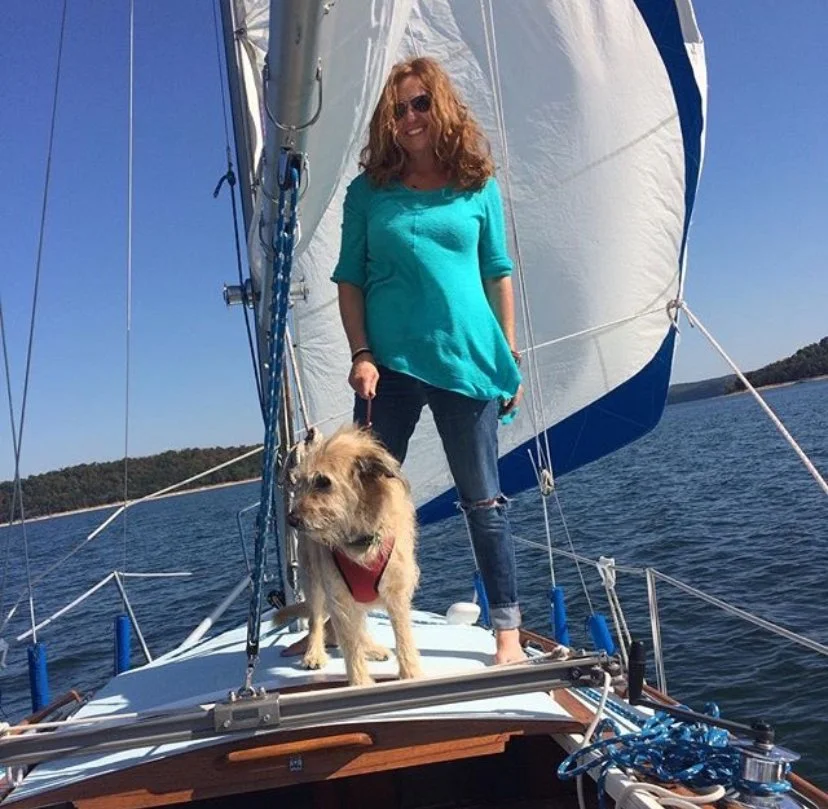
Tethering Your Dog
To tether or not to tether? That is the question. My answer? ABSOLUTELY NOT!
If the boat goes over, I don’t want my dog tied to me or the ship. That goes for canoeing and kayaking, too. Henri and I once went over in a kayak. As I felt the boat starting to go, I was able to toss him clear. If he’d been tethered, I wouldn’t have had time to unclip him. It’s likely you won’t either. That being said, if you do choose to tether your dog, connect to a harness, NOT acollar.
Buy A Dog Ramp
If your boat doesn’t have a swim deck, or even if it does, you may want to consider a floating dog ramp. Getting in and out, especially if you have a bigger dog, would be safer and much easier. Do research based on your boat specs and your dog’s size. Before using on the water, do on-land training with your ramp or an agility A-frame.
Know The Signs of Heat Exhaustion & Water Toxicity
Heat exhaustion and heat stroke are real threats. It is critical that you know the signs and are prepared to act.
Excessive panting and drooling, graying of the gums, lethargy, and staggering are bad signs and may require veterinary attention. However, your first course of action is to remove your pup from the environment and begin cooling treatment.
Water intoxication is another serious condition and presents when your dog has ingested too much water. Excessive amounts can create sodium imbalance causing the body’s cells to fill with water and swell. Water intoxication is rare, but can escalate quickly causing seizures, coma, and potentially death. Knowing the signs and acting swiftly can save your dog’s life. If you notice loss of coordination, lethargy, bloating, vomiting, glazed eyes, excessive drooling, or difficulty breathing, seek veterinary care.
Additional Accessories For Boating With Your Dog
There exists everything from protective eyewear to sun suits, and although I once spent a ridiculous sum on a Jolly Roger collar, much of that stuff is excessive. The only necessity I haven’t mentioned is a potty patch. If you’re overnighting, you may want to train for that.
Our boat bag basics:
First aid kit. In this you might want to consider including pet approved medication for motion sickness.
Gel cooling pad and/or cooling bandana. This is some of the best money I’ve ever spent on dog accessories.
Pet-approved sunscreen. Yes, sunscreen for your dog. Trust the redhead.
Spill-proof bowl
Dustpan brush. Handyfor brushing sand from puppy paws.
Sunglasses straps. This is for me. If I could actually remember to use them, I’d save a lot of money.
Boating with your dog should be fun, not stressful. By educating yourself, building the right skills through training, and using proper, reliable equipment to support your pup, you can ensure a safe, enjoyable day for both you and your boat dog.