
Historic Waterways: A Journey Down the Southeast's Storied Shores
By Daria Smith
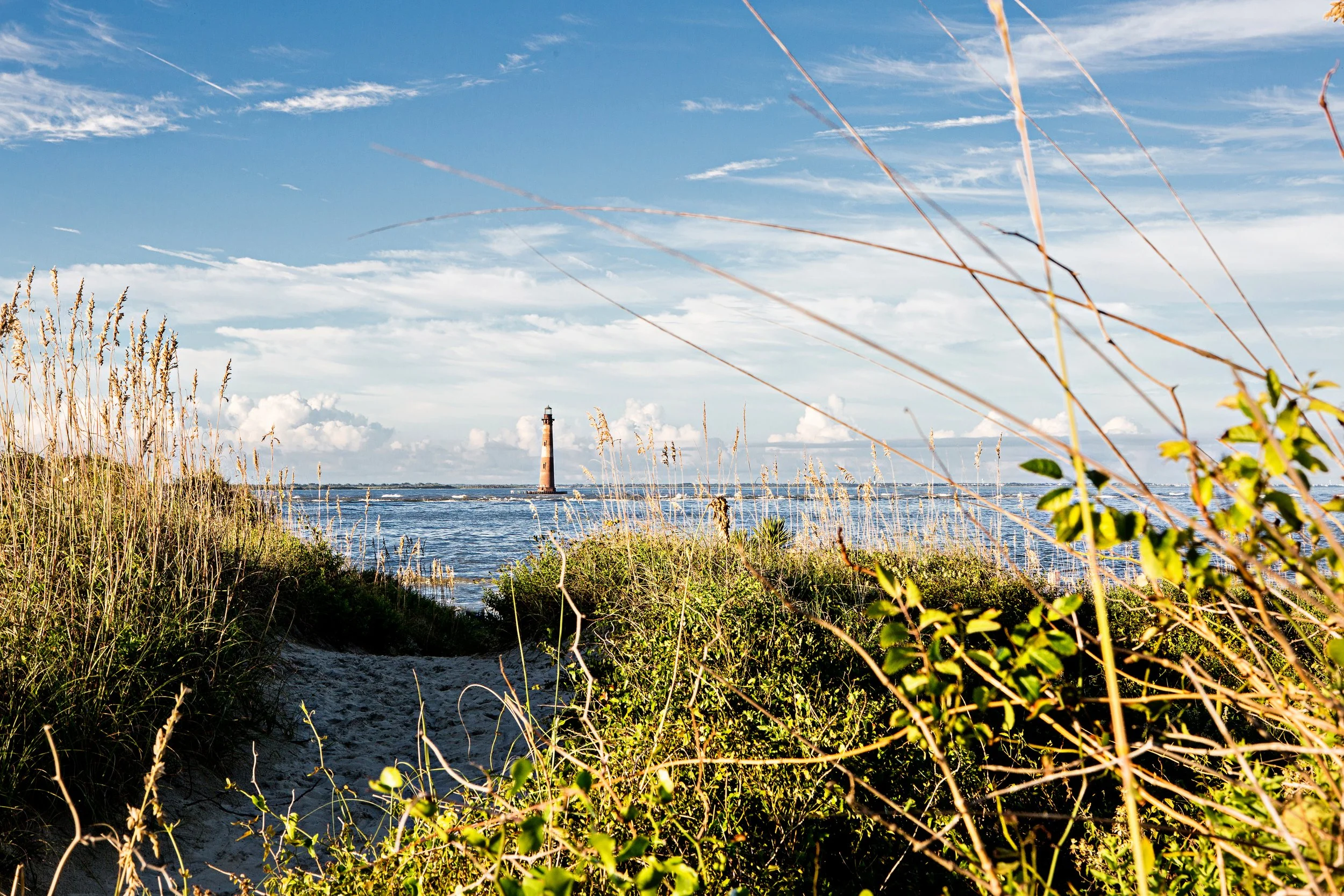
Courtesy of Explore Charleston, ExploreCharleston.com
Long before highways stitched the Southeast together, rivers, sounds, and tidal creeks carried colonists and cargo. The towns that rose along their banks wear history on their sleeves: weathered docks, rice-field ruins, and shrimp boats that put out at dawn as they have for generations. Chart a course from the shipwreck-strewn shoals of the Outer Banks down through the mangrove-lined channels of the Florida Keys, and let the water narrate the journey.
North Carolina
Outer Banks
Along Roanoke, Croatan, and Pamlico Sounds, thin ribbons of barrier island hold centuries of history in their sand, home to the Lost Colony, England's first attempted New World settlement, and the Graveyard of the Atlantic, where storms and shoals have claimed hundreds of ships. Kitty Hawk wrote its own chapter in 1903, when the Wright brothers coaxed the first flight off the dunes.
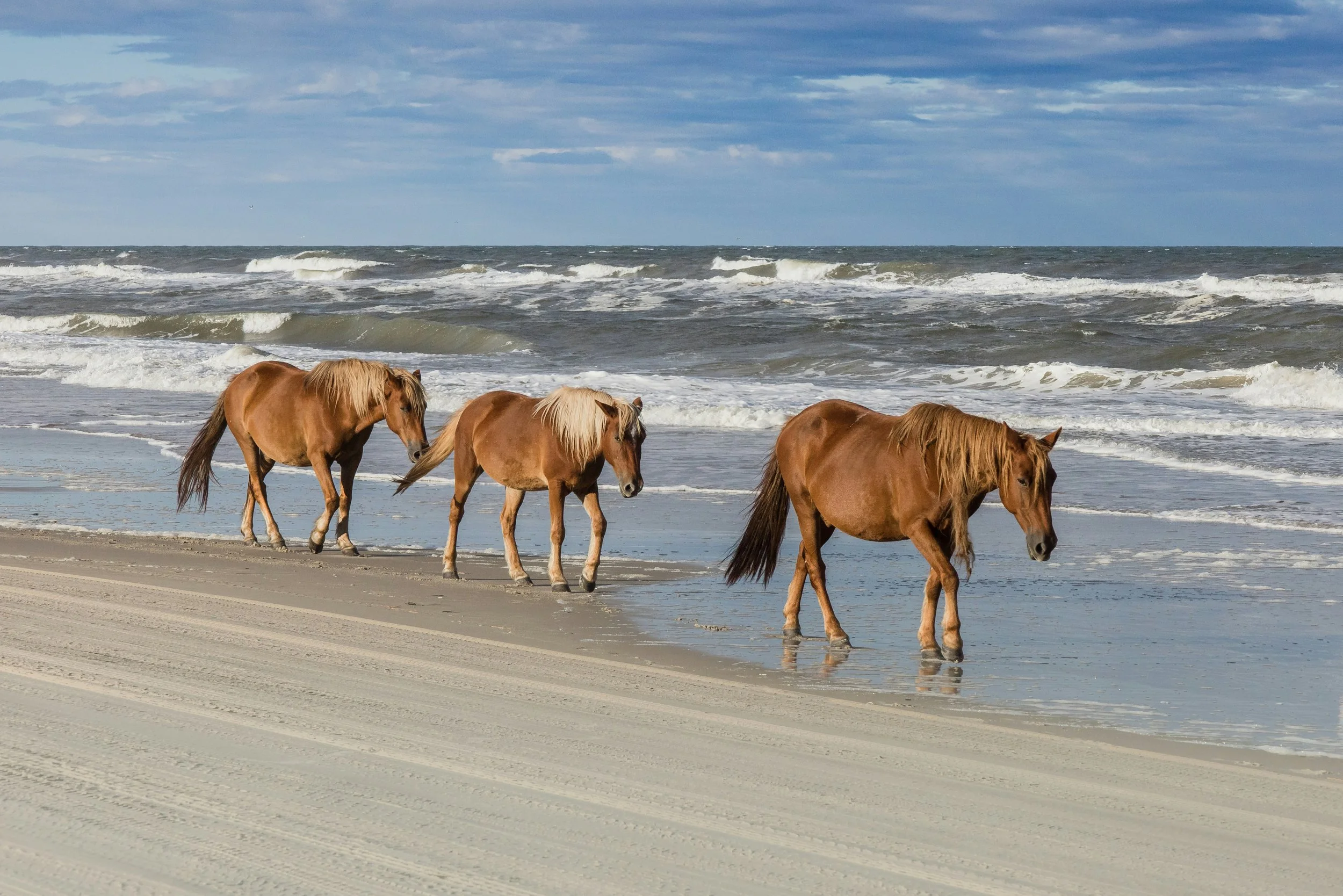
In Duck, the Sanderling Resort welcomed chef Vivian Howard's new restaurant, Theodosia, to its 123-room property in 2025. Just north of Duck, wild horses roam free on the beach at Corolla, and in Manteo, the Elizabeth II living history site brings the colonial voyage back to life. Round out a visit with breakfast at Sam & Omie's in Nags Head, opened more than 70 years ago by charter fisherman Sambo Tillett, or a stop at Duck's Cottage Coffee & Books, originally a hunting cottage built in 1921.
Morehead City and Beaufort
Bogue Sound and Beaufort Inlet carry their own legend: Blackbeard's flagship, Queen Anne's Revenge, wrecked just offshore, and its remains draw divers and historians. The Beaufort Hotel sits on Taylor's Creek, overlooking the Rachel Carson Reserve, where roughly 30 wild horses graze the marsh grass in full view of the porch. The North Carolina Maritime Museum anchors Beaufort's historic waterfront district, a fitting complement to nearby Emerald Isle's quieter beaches and Topsail Island's sea turtle conservation history. Beaufort Grocery Company has served its French-bistro-meets-coastal fare in the historic district for more than 35 years, and The Backstreet Pub pours pints inside a century-old former bakery. Across the water in Morehead City, El's Drive-In has been slinging its famous shrimp burger for 67 years and counting, a fixture as enduring as the boats that work the sound.
Wilmington and Southport
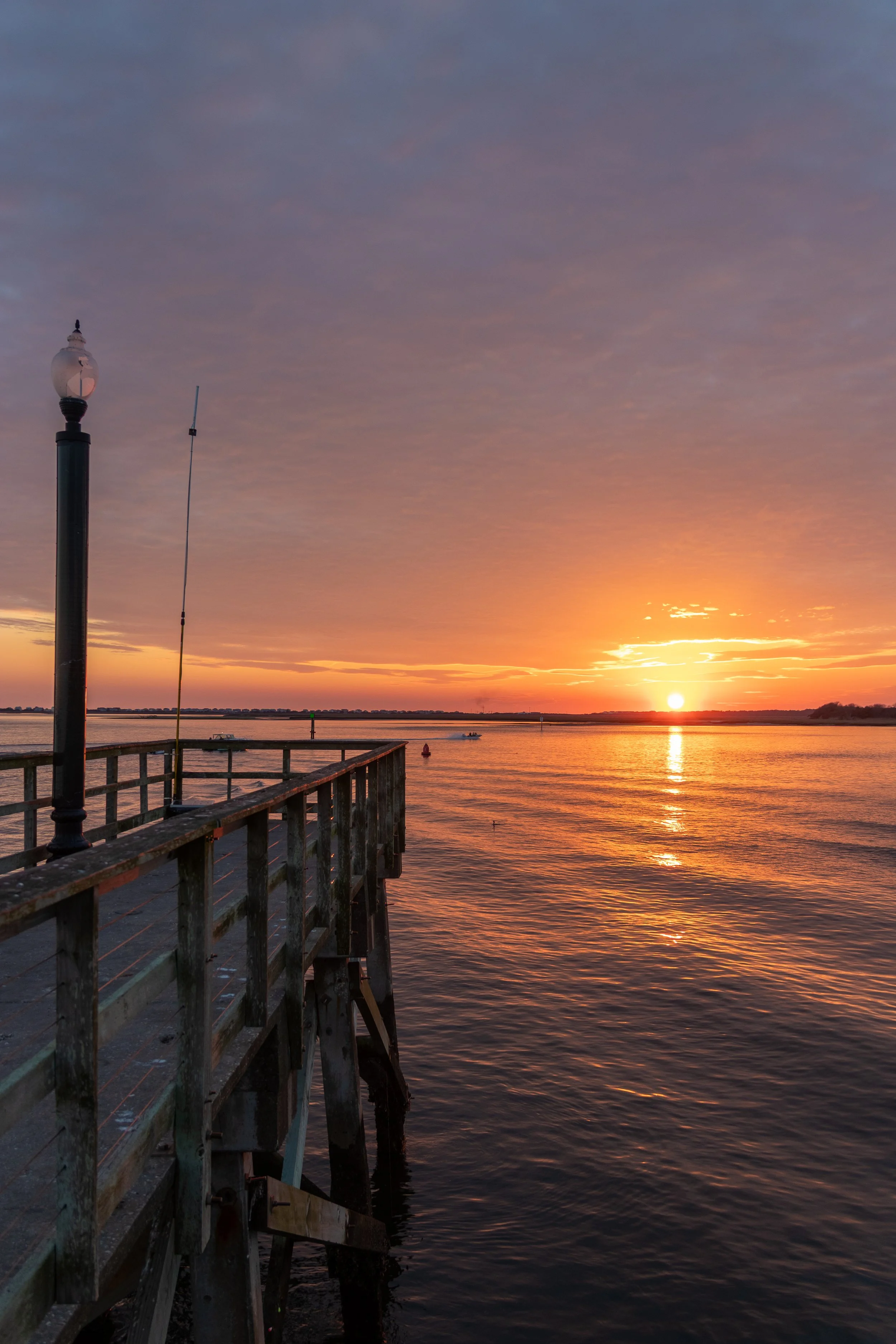
Photos courtesy NC’s Brunswick Islands.
The Cape Fear River made Wilmington a Revolutionary and Civil War blockade-running port, and today its downtown draws visitors to the James Beard-nominated Seabird, within walking distance of Bespoke, an all-day cafe pouring craft coffee by morning and cocktails by night. Outside downtown, browse the nautical treasures of Angler's Attic, then head to Wrightsville Beach to walk or run the 2.5-mile Loop, a live-oak-shaded path that crosses two bridges over Banks Channel and slips past salt marsh, the Intracoastal Waterway, and the gardens at Harbor Way.
The better history lesson awaits farther south, where the lower Cape Fear widens into the sea at Southport. Once a pilot town guiding ships through the river's mouth, Southport keeps watch with Old Baldy, its weathered lighthouse. Southport was originally founded as Smithville in 1792, and renamed itself in 1887 in a bid to lure a major shipping port away from Wilmington, John Mann, co-owner of the Carriage House Inn, shared with me during the inn’s 4:30 p.m. happy hour. Leaving the late 1930s double-brick house, stop into the North Carolina Maritime Museum. Walk the historic waterfront, and settle in for dockside seafood on the yacht basin at Edgewater 122. Or, for an elevated dinner, book a table at Southern, A Gathering Place Kitchen & Bar.
South Carolina
Georgetown
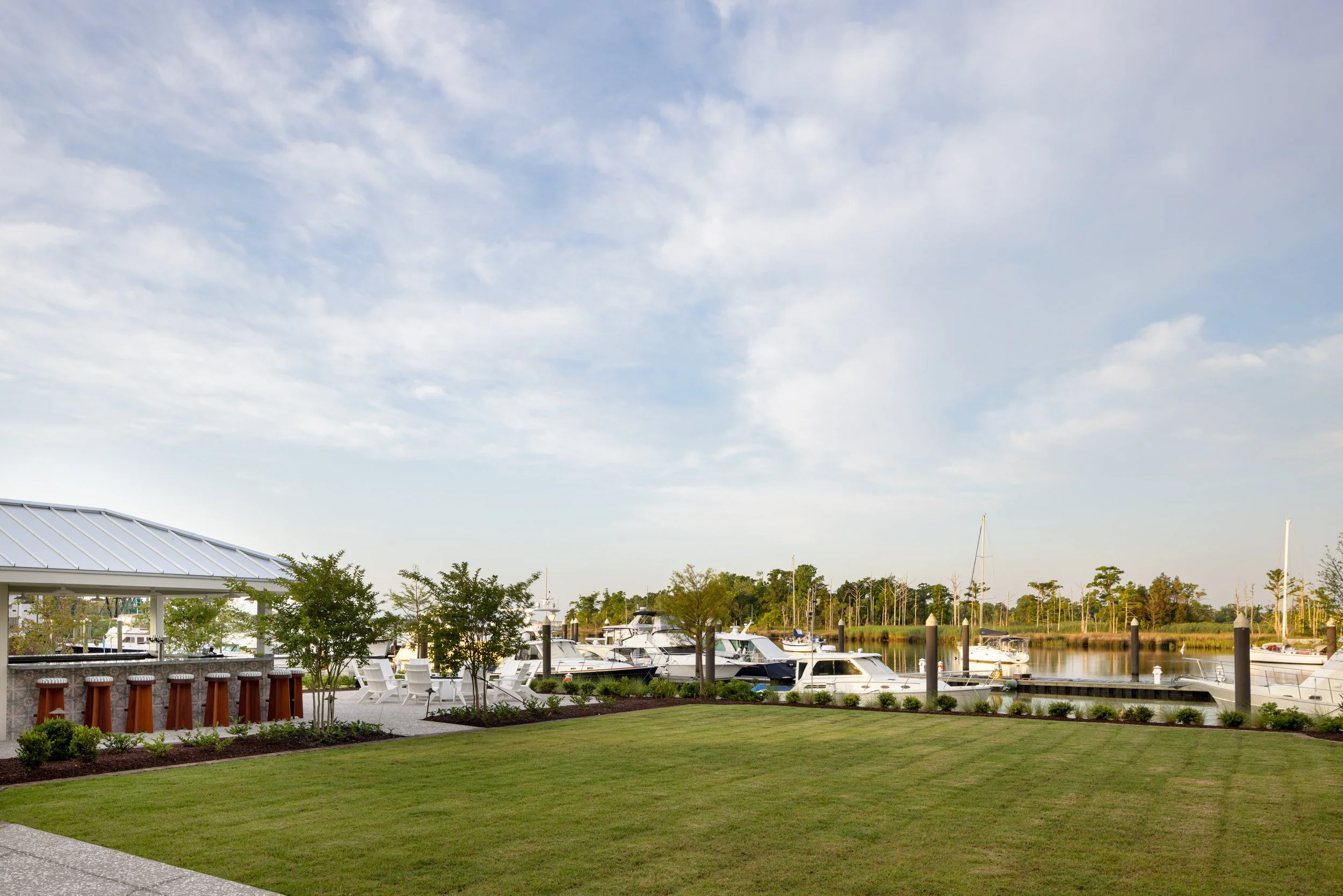
Photo by Molly Rose.
The Waccamaw River empties into Winyah Bay at Georgetown, South Carolina's third-oldest city, founded in 1729 on the fortunes of indigo and rice, which at its peak produced half the nation's rice supply. The George, a 56-room boutique hotel that opened in March 2024, anchors the revitalized waterfront as the first new hotel on Front Street in nearly half a century. Dinner at The Independent, tucked inside, brings grilled oysters slicked in ancho chile butter and a she-crab soup finished with basil oil, followed by a nightcap at Eliza's, the dockside bar out back. Round out downtown with Frank's on Front and Winyah Angler, hung with hand-tied flies and Clay Rice's black-and-white Lowcountry landscapes. A short trip up the Intracoastal Waterway leads to McClellanville, a ten-street shrimping village on Jeremy Creek, where the Village Museum traces the town's shrimping heritage and Archibald Rutledge lore, and T.W. Graham & Co. serves a fried seafood platter.
Charleston and Mount Pleasant
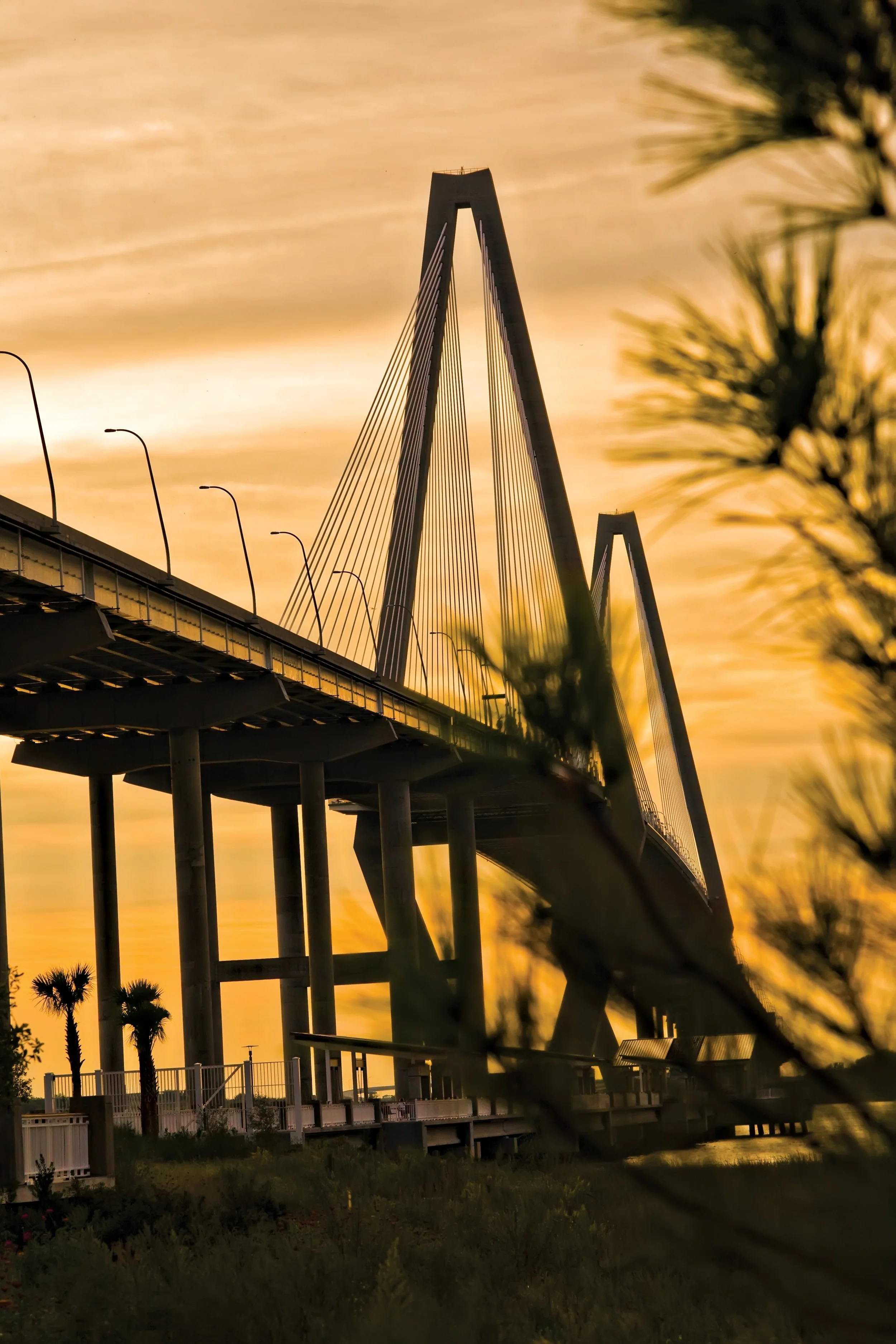
Courtesy of Explore Charleston, ExploreCharleston.com.
The Cooper, Ashley, and Wando Rivers converge at Charleston Harbor, a colonial trade port whose history includes Fort Sumter and a rice culture built on enslaved labor. Downtown, The Cooper, the city's only hotel on the water, crowns itself with Bar Marti, a rooftop lounge pouring coastal cocktails beside an infinity pool with harbor views. Across the water in Mount Pleasant, order fried seafood at The Wreck on Shem Creek, where shrimp boats work the docks below the deck, then wander the Old Village for brunch at Post House Inn. Downtown, the line at Chubby Fish starts forming well before the doors open, as the restaurant doesn’t take reservations. From there, Isle of Palms and Sullivan's Island offer pristine beaches and Fort Moultrie history. Folly Beach brings a laid-back surf culture, best sampled with fish tacos at Chico Feo or breakfast at Lost Dog Cafe.
Beaufort and Hilton Head
The Beaufort River and Port Royal Sound carry deep Reconstruction-era history and one of the richest Gullah Geechee heritages on the coast, including some of the earliest sites of Black land ownership after emancipation. Stay at the Beaufort Inn, a historic Victorian mansion on Craven Street, and spend a morning wandering the historic waterfront. McIntosh Bookshoppe holds an extensive collection of sporting literature from Archibald Rutledge and Havilah Babcock, and the Pat Conroy Literary Center honors the city's best-known writer just blocks away. Hunting Island State Park, with its striped lighthouse and Forrest Gump filming sites, and Fripp Island's quieter shores round out the area. Across the water, Hilton Head keeps its own rhythm: bike the maritime forest of Sea Pines Forest Preserve, grab a bite at Hilton Head Social Bakery or Skull Creek Boathouse, and catch the RBC Heritage golf tournament each spring.
Georgia
Savannah
The Savannah River carried tall ships into a colonial port that grew rich on the cotton trade and endured a Civil War siege that, by luck or design, spared much of the city's antebellum architecture. The newest stay is The Douglas, a 16-room property that opened in July 2025 inside a meticulously restored 1853 townhouse on East Oglethorpe Avenue, where heart pine floors glow beneath Murano chandeliers and Turkish rugs soften the light. The concept comes from Obstinate Hospitality, the group behind Charleston's Wild Olive, and its new restaurant, Lester's, has already become a draw of its own. By day, the Tybee Island Lighthouse has guided ships past the river's mouth for generations, and Whitaker Street's shops, from HANNAH E. to Asher + Rye, welcome an leisurely afternoon of browsing beneath the live oaks. Cap it off with dinner at Common Thread and a glass of wine at Late Air.
St. Simons Island and Jekyll Island
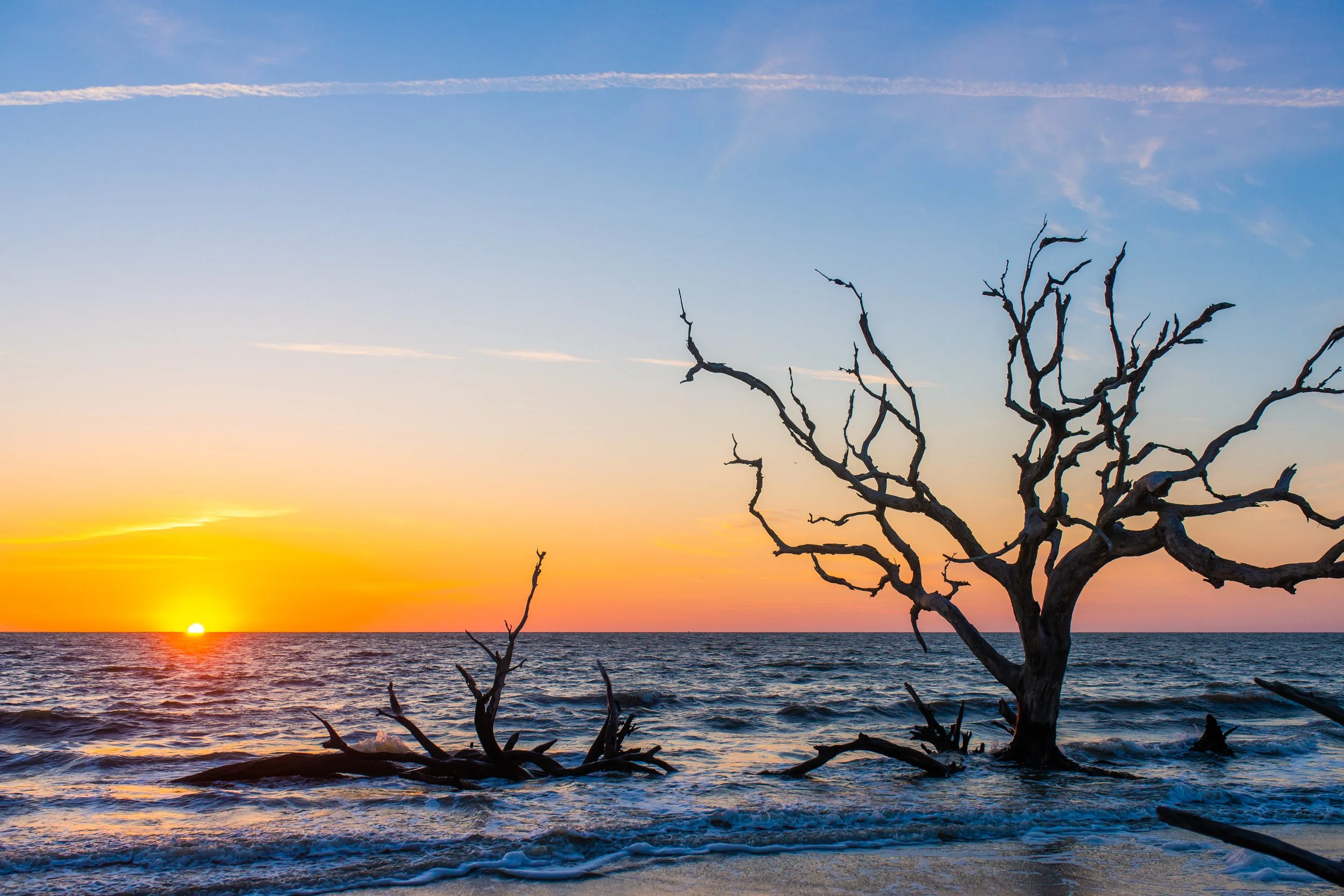
Photos courtesy Jekyll Island Authority.
The barrier islands of the Golden Isles trace the mouth of the Altamaha River, called Georgia's Amazon and one of the least dammed major rivers on the East Coast. On St. Simons, catch the summer makers market, or settle in for dinner at Half Shell. Jekyll Island's Driftwood Beach is a striking graveyard of fallen live oaks and cedars, bleached silver by salt and sun, and the Jekyll Island Club Resort, built in 1888 as a private retreat for the Vanderbilts, Morgans, and Rockefellers, is now a member of Historic Hotels of America. Sea Island carries its own Gilded Age history at The Cloister, its Mediterranean-style resort dating to the 1920s, complete with two golf courses, a spa, and a falconry school at Broadfield where birds take wing over the marsh.
Brunswick and Darien
Brunswick's shrimping heritage anchors the Golden Isles each April at the Golden Isles Fly Fishing Festival, spearheaded by On The Fly Outfitters downtown. Farther up the Altamaha, Darien, and Butler Rivers sits Darien, Georgia's second-oldest planned town, founded in 1736 by Scottish Highlanders recruited by General Oglethorpe. By the 1960s, it was home to the largest shrimping fleet on the Georgia coast, a heritage celebrated each spring at the Blessing of the Fleet festival, when boats parade the river decked in flags. Stay at Oaks on the River, a 52-room luxury boutique resort that opened in 2021 on a bluff overlooking the water. Watch shrimp boats dock while you eat at Skipper's Fish Camp or Marsh Pirate, and visit the Adam Strain Building, a circa-1815 tabby warehouse and one of the only structures to survive the Civil War burning of Darien.
Florida
St. Marys and Amelia Island
The St. Marys River marks the Georgia-Florida border, and nearby Fernandina Beach carries the distinction of having flown eight flags over its history. Stay at the Florida House Inn, built in 1857 as a railroad boarding house and now the oldest surviving hotel in the state, listed on the National Register of Historic Places. From St. Marys, catch the ferry to Cumberland Island National Seashore, where feral horses roam the dunes past the ivy-choked ruins of the Carnegie family's Dungeness estate and the Plum Orchard mansion. The tiny church on the island, where John F. Kennedy Jr. and Carolyn Bessette married in 1996, draws its share of visitors, and the Greyfield Inn, the Carnegies' former winter home, remains the island's only overnight stay, lit by oil lamps after dark.
St. Augustine
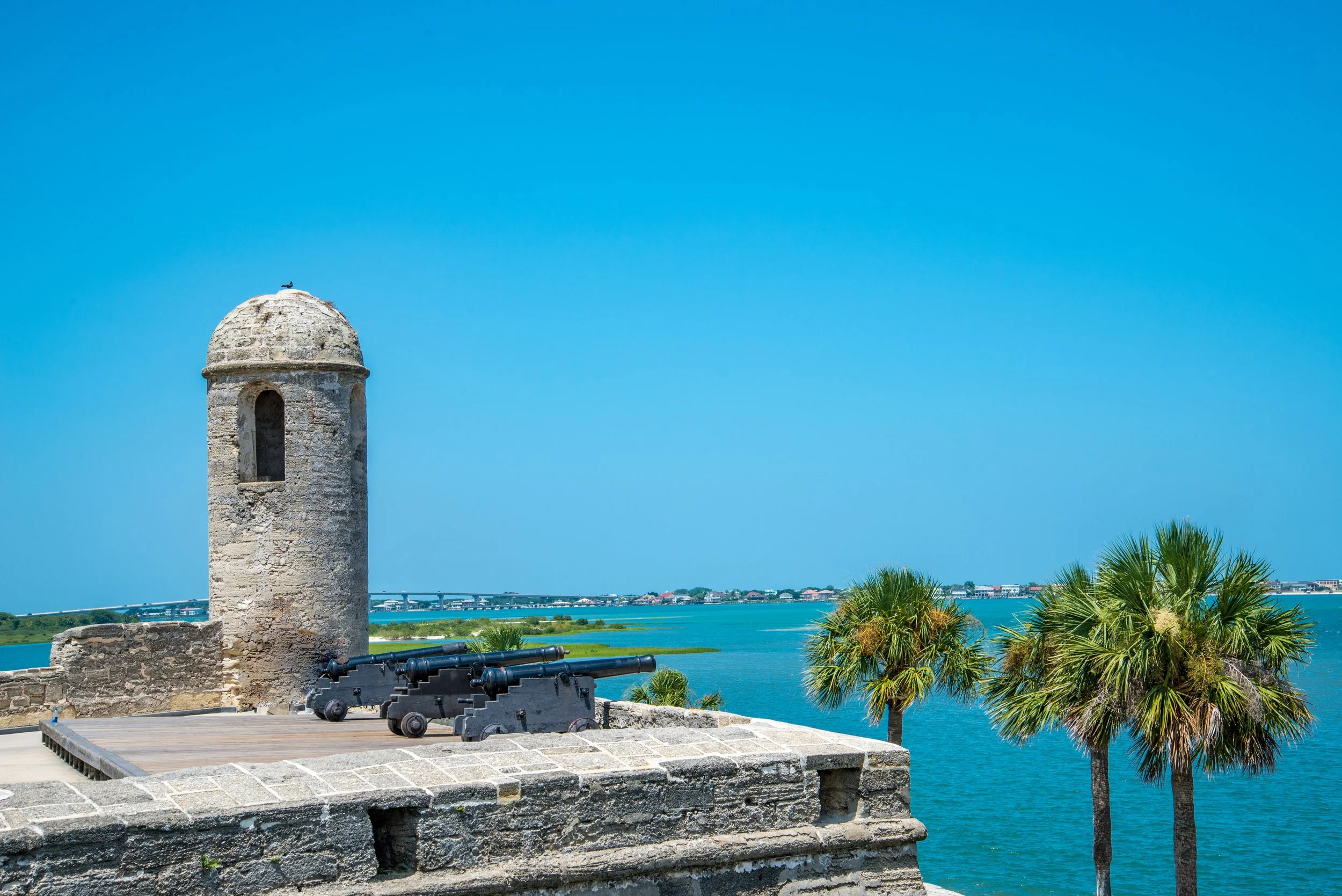
Photos courtesy Adobe Stock.
The Matanzas River runs past the oldest continuously occupied European settlement in the country, guarded by the Castillo de San Marcos, a Spanish fortress built in 1695, and Fort Matanzas farther downriver. Stay at the St. George Inn, a small boutique property on George Street in the historic district, steps from the fort, with a wraparound porch and an on-site wine bar for evenings in. Climb the 219 steps of the St. Augustine Lighthouse for a 165-foot view over the water, then cool off with a cocktail chiseled to order at the Ice Plant Bar, tucked inside a 1920s ice factory above the St. Augustine Distillery. For dinner, The Floridian pairs art-filled walls with a citrus-glazed coconut cake worth the trip alone, or grab a seat at Boat Drinks for nautical cocktails and seafood by the water.
Florida Keys
The Overseas Highway follows the same waterway chain that once carried Flagler's Overseas Railroad, a fitting bookend to his influence farther up the Florida coast. Key West's history runs deeper, built on wrecking, salvage, sponging, and the cigar trade. Ernest Hemingway's old haunts draw visitors: the Hemingway Home and Museum keeps his writing studio intact, original typewriter and all, patrolled by nearly 60 six-toed cats descended from his own. Sloppy Joe's Bar on Duval Street remains a storied watering hole from his afternoons there with fishing comrades and a glass of scotch. Garrison Bight Marina, where Hemingway launched his boat, sees anglers out. Stay at the Gardens Hotel, a boutique property built around a former botanical garden estate, and start the morning with breakfast and Key lime pie at Blue Heaven before a stroll through the historic seaport.
From the Outer Banks to Key West, the Southeast's waterways carry a familiar current: towns shaped by tide, living alongside the water that built them. Chart a course to any destination, and the history comes free with the view.