
Feature: Go Float Your Boat
Here are tips to remember on how to make the most of your show, and your dollar.
By Mary Robinson of Clearwater Marine

Boat show season is upon us for the rest of 2025 and the beginning of next year. For boaters it’s like going to the best toy store in all the land! Boat shows offer such a great opportunity to meet new people, ask questions, learn about the latest products, and of course pick up a little swag. For those new to boating, or even experienced boaters, knowing what to ask and when can be a bit daunting.
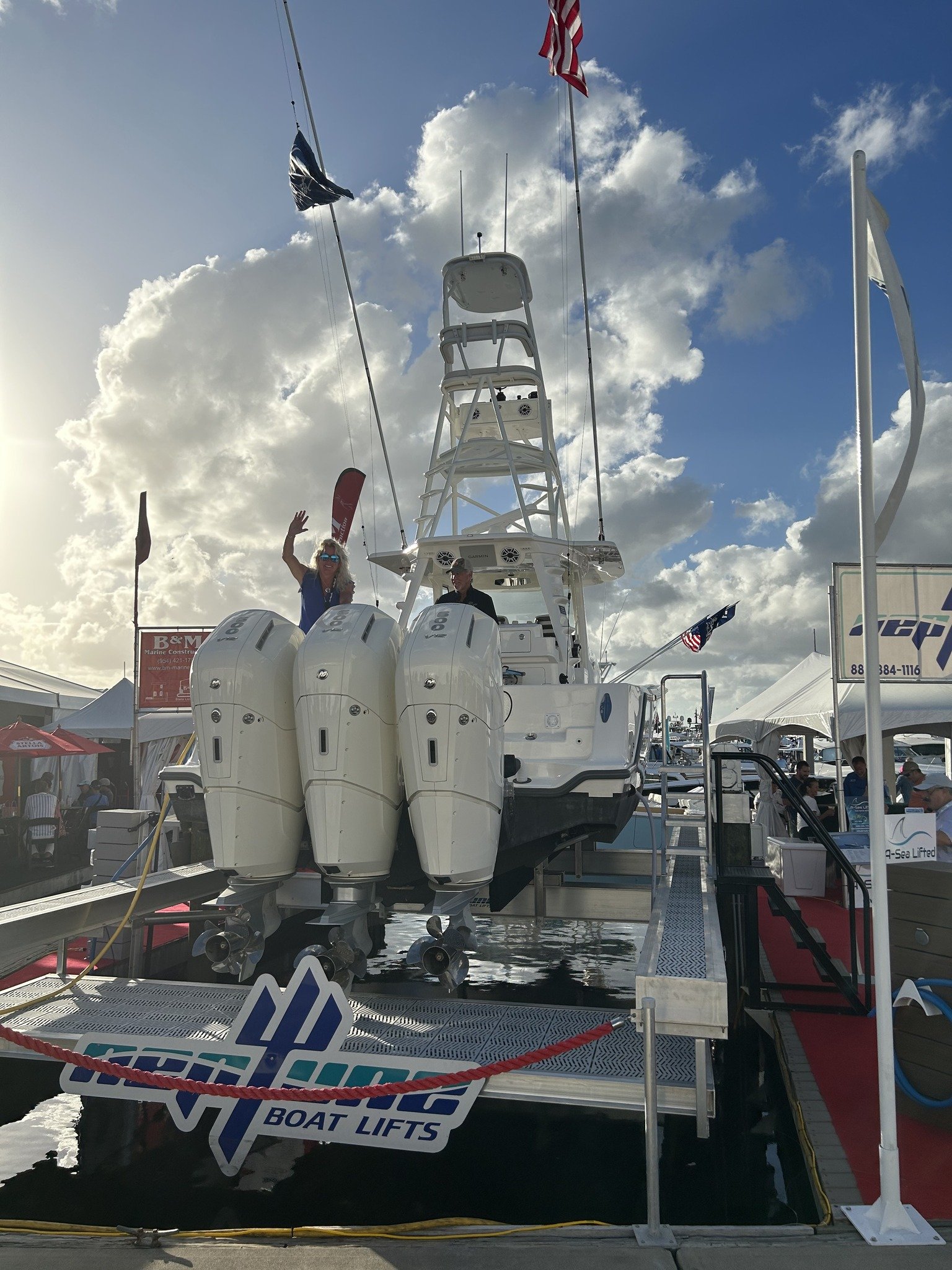
Most boat show tickets now can only be ordered online (i.e. Lauderdale, Miami, and even smaller venues) so plan to pre-order before standing in the parking lot. Once there, it’s like entering Disney world — and that can be overwhelming! New boats are everywhere; dealers want you to check out their new boat and are pressuring you to buy; and there are long lines to board the large boats (so wear good socks because there are no shoes on board). I have found many of the serious buyers attend the first two days, and the last day tends to be a romper room of kids, strollers, and some vendors packing up and leaving early. Dealers are often exhausted after a 4-day or weeklong event, so it isn’t the best time to haggle on prices.
For new attendees/first time boat buyers, a few helpful hints:
Do your homework ahead of time. Research at least three brands you may be interested in and know why. Most dealers have a Product Information Guide (PIG) and can help you compare pros and cons from one brand to another.
Explore what type of boating you want to do. Fishing? Day cruising? Weeklong adventures? Know what you want on your boat (i.e. air conditioning, stove, grill, canvas options, technology). Options can get overwhelming and having a list of needs versus wants is important as many options can tack on thousands of dollars.
Financing. If you know what you want, know what is in your budget to spend. It is very helpful to keep you on track of the needs versus wants. Getting pre-approval from your bank is often helpful if you are seriously in the market for an upgrade. Knowing what your current boat is worth is also critical and can be a useful bargaining chip if you are looking to trade.
Trailers. Explore the options. Are you planning to keep it on the dock and use it twice a year, or use it every weekend to visit various lakes? Ask the dealer what options there are (many themselves may not know). Aluminum is lighter weight and resists salt; galvanized steel looks pretty but be sure it is treated with corrosion resistant paint. Also, know the towing capacity of your current truck/car. The trailer is an important part of protecting a key investment.
Engines. Do your research. Outboards are all the trend now and are very reliable, and work well in colder climates. Dealers attend training annually to know the latest options, efficiencies, and even color combinations. Remember the horsepower on a pontoon will be lend to dramatically different performances and fuel consumption compared to that of a fiberglass boat! Having a dealer with knowledge of this, and now with the introduction of sharrow props (compared to aluminum or stainless steel), will be very helpful.
Propellors, or Props. This is an interesting discussion, and each boater has their preference. Stainless is the standard for performance—and the most expensive. Aluminum is light weight, cheaper, and can be replaced easily. Sharrow props dramatically change engine performance and were developed to be a quieter option underwater for fish/manatee in their habitats. So, it is probably not the best option if attempting Great Lakes boating, but for sure in Florida and the south.
Don’t be afraid to ask the dealer to “dumb it down” if they begin to speak the language you don’t understand. Windlass, bow thrusters, RPM’s, draft, beam, Seakeeper gyro stabilizers can all be confusing when you are new to the market. It’s important to ask, “Why do I need this?” or “What does that do?” when they could be trying to upsell you.
Know when to walk away. If a dealer is pushing too hard, or running multiple numbers and options, ask them to email you or call you when finalized. Having it in writing and comparing it to online options in the calm of your living room (versus a crowded show) helps everyone make good decisions.
Knowing the above will help you to learn the most about what you need in your next boat to make it a great day on the water for you and your family.
